

Introduction: Your Tires Determine What Your 4×4 Can Do
A Toyota Land Cruiser, Toyota 4Runner, Nissan Patrol, Jeep Wrangler or Mitsubishi Pajero can be a capable off-road vehicle. But even a well-equipped 4×4 has one fundamental limitation: its tires must transfer the engine’s power and the vehicle’s weight to the ground.
You can install a suspension lift, lockers, a winch and larger wheels, but the wrong tires can still leave you struggling on a muddy forest road or a rocky mountain trail.
At the same time, choosing the most aggressive tires available does not automatically make your vehicle better. A tire designed for extreme off-road conditions can be noisy, less comfortable on asphalt, heavier and less suitable for everyday driving.
This matters particularly in Armenia, where a single trip can include city streets, highways, gravel roads, rocky mountain passes, muddy forest trails and snow-covered terrain.
So, which tires should you choose?
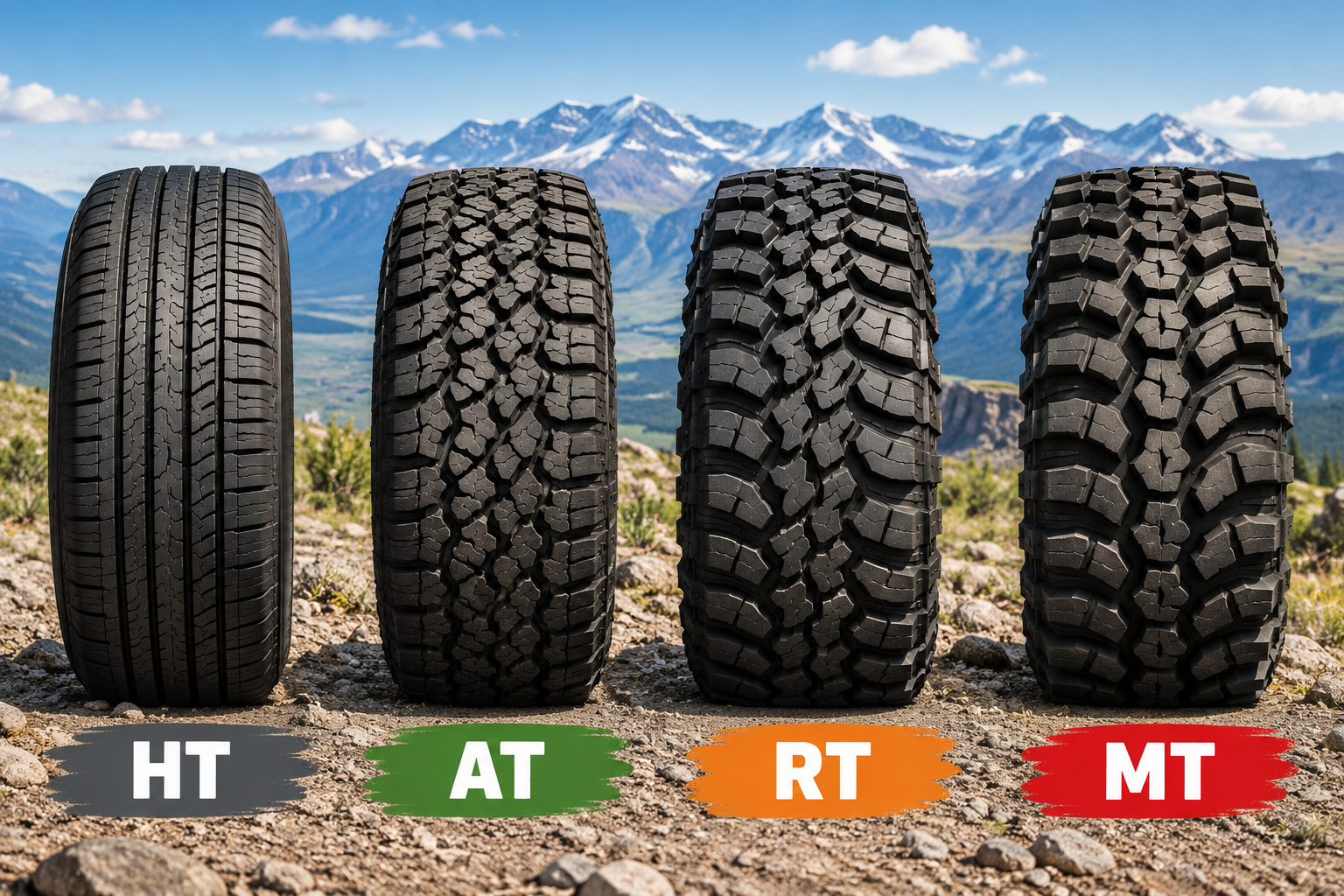
In this guide, Offroad Zone Armenia explains the differences between five common tire categories:
- HT — Highway Terrain
- AT — All-Terrain
- RT — Rugged Terrain
- MT — Mud Terrain
- Extreme MT — Extreme Mud Terrain
We will also explain the often-misunderstood LT designation, which refers to a tire’s light-truck specification rather than its tread category.
1. HT Tires — Highway Terrain
What are HT tires?
Highway Terrain tires are designed primarily for paved roads. They are commonly fitted to factory SUVs, crossovers and pickups that spend most of their time commuting, travelling on highways or driving around town.
Their tread patterns generally feature relatively closely spaced blocks, narrower grooves and designs intended to provide predictable handling on asphalt.
The main objective is to balance road comfort, grip, fuel efficiency and tread life.
How do HT tires perform?
On asphalt: HT tires are usually the quietest and most comfortable option in this comparison. They are designed to provide predictable handling, and many perform well in wet conditions when properly selected and maintained.
On gravel: They can handle maintained gravel roads and occasional unpaved access roads, but they are not designed for repeated use on sharp rocks or heavily rutted trails.
In mud: Their relatively closed tread patterns can fill with mud, reducing traction. Once the tread becomes clogged, the tire may struggle to find grip.
In snow: Performance depends on the specific tire’s tread design, rubber compound and winter certification. A highway tire is not automatically a winter tire, and an M+S marking alone does not guarantee strong snow or ice performance.
Advantages of HT tires
- Comfortable and quiet highway driving.
- Generally lower rolling resistance.
- Good choice for everyday commuting.
- Often a sensible option for drivers who rarely leave paved roads.
Disadvantages of HT tires
- Limited traction in deep mud and loose terrain.
- Less suitable for repeated driving over sharp rocks.
- Usually less capable on difficult off-road trails than more specialized designs.
Who should choose HT tires?
HT tires are suitable for SUV and pickup owners who primarily drive in Yerevan or other cities, travel between Armenian towns, and only occasionally use well-maintained dirt roads.
Example: If your 4×4 vehicle spends 95% of its time on asphalt and only occasionally visits a picnic area, a good HT tire may be a better choice than an aggressive mud tire.
2. AT Tires — All-Terrain
What are AT tires?
All-Terrain tires are designed to balance paved-road performance with off-road traction. They are one of the most versatile options for 4×4 vehicles.
Compared with HT tires, AT tires typically have larger tread blocks, wider grooves and more pronounced shoulder lugs. These features help the tire maintain traction on gravel, dirt, loose soil and moderate off-road terrain.
However, AT tires vary significantly. Some are designed for predominantly road use, while others have aggressive tread patterns and reinforced construction for demanding trails.
Do not assume every tire marked AT offers the same performance.
How do AT tires perform?
On asphalt: Most AT tires offer reasonable comfort and predictable handling, although they can be noisier and less fuel-efficient than comparable HT tires.
On gravel: They generally perform well, making them suitable for rural roads, camping trips and many mountain approaches.
On rocks: Their larger tread blocks and, depending on the model, stronger sidewalls can provide better traction and protection than typical highway tires. Sharp rocks can still damage any tire.
In mud: AT tires handle light to moderate mud, but closely spaced tread blocks may become clogged in sticky clay. More aggressive MT designs generally clear deep mud more effectively.
In snow: Some AT tires perform very well, particularly those with the Three-Peak Mountain Snowflake (3PMSF) symbol. Others are not certified for severe snow conditions. Always check the exact tire model.
Advantages of AT tires
- A practical balance between highway and off-road performance.
- Suitable for gravel roads, camping and moderate mountain trails.
- Usually quieter and more comfortable than comparable MT tires.
- Available in a wide range of sizes and constructions.
- Some models offer excellent winter versatility.
Disadvantages of AT tires
- Less effective than specialized MT tires in deep, sticky mud.
- Not all AT tires have strong sidewalls or high puncture resistance.
- Aggressive AT models can still be noisy and heavy.
- Performance in snow and ice varies considerably between models.
Who should choose AT tires?
AT tires are often the best starting point for a 4×4 owner who needs one set of tires for daily driving and weekend adventures.
They are particularly suitable for Armenian drivers who travel between Yerevan and the regions, visit Dilijan or Tavush, explore mountain roads around Aragats, or regularly drive on gravel and dirt roads without spending every weekend in extreme terrain.
Example: A Toyota Land Cruiser or Toyota 4Runner used daily and taken on mountain trips several times a month will often benefit more from a well-chosen AT tire than from a highly aggressive mud tire.
Our advice: If you are unsure which category to choose, start by evaluating the terrain you actually encounter. For many dual-purpose 4×4 vehicles, AT tires provide the most practical balance.
3. RT Tires — Rugged Terrain
What are RT tires?
Rugged Terrain tires, often marked R/T, are a hybrid category positioned between AT and MT tires.
They combine aspects of an all-terrain design with the more aggressive appearance and tread features of a mud-terrain tire. They commonly have larger tread blocks, prominent shoulder lugs and more open grooves than many conventional AT tires.
The RT category is not defined by one universal tread standard. Manufacturers use their own designs, so two RT tires may differ considerably in noise, winter performance, sidewall construction and off-road capability.
How do RT tires perform?
On asphalt: RT tires can offer a useful compromise for drivers who want an aggressive appearance without accepting all the compromises of an MT tire. However, they are generally noisier than road-oriented AT models.
On gravel and dirt: Their aggressive shoulders and larger blocks can provide good traction on loose surfaces.
On rocks: Depending on the design, RT tires may offer strong shoulder grip and robust construction. Sidewall strength must be checked for the specific model rather than assumed from its appearance.
In mud: They generally perform better than mild AT tires in moderate mud, but they do not necessarily match a purpose-built MT tire in deep, sticky conditions.
In snow: Results depend on the tread design, compound and winter rating. An aggressive appearance does not automatically mean good snow or ice traction.
Advantages of RT tires
- More aggressive appearance than most AT tires.
- A useful compromise between road driving and regular off-road use.
- Can offer good traction on rocky tracks, dirt and moderate mud.
- Often attractive to drivers who want a modified 4×4 appearance without choosing a full MT tire.
Disadvantages of RT tires
- Usually noisier and heavier than road-oriented AT options.
- May consume more fuel than a less aggressive tire.
- Deep-mud performance depends on the exact tread design.
- Winter capability varies and should not be judged by appearance alone.
Who should choose RT tires?
RT tires are suitable for drivers who want their 4×4 to look and perform more aggressively than a conventional AT setup, while still using it regularly on paved roads.
Example: A lifted Jeep Wrangler, Toyota 4Runner or Nissan Patrol used for everyday driving, weekend trails and occasional muddy mountain roads could be a good candidate for RT tires.
Important: Do not buy RT tires based on their appearance alone. Compare their wet-road handling, load rating, noise, winter certification and construction before making a decision.
4. MT Tires — Mud Terrain
What are MT tires?
Mud Terrain tires are designed for demanding off-road use, particularly deep mud, loose soil and rough trails.
Their tread patterns generally feature large, widely spaced lugs and deep grooves. The open pattern helps the tire release mud and debris as it rotates, allowing the tread blocks to regain contact with the ground.
Many MT models also have aggressive shoulder lugs that help provide traction when the tire is partly buried in mud or when a vehicle is moving through deep ruts.
Some models are designed with rock crawling and durability in mind, while others focus more strongly on mud performance. Not all MT tires are identical.
How do MT tires perform?
On asphalt: MT tires are generally noisier than AT and RT tires. Their large tread blocks can also produce less refined handling, and wet-road braking performance can vary considerably between models.
On gravel: They can provide good traction on loose surfaces, but their advantages may be less noticeable on hard-packed gravel than on difficult terrain.
In mud: This is their main strength. Large tread blocks and open grooves help evacuate mud and maintain traction in conditions where many AT tires struggle.
On rocks: MT tires can perform very well, especially when the tread and sidewall design suit rock crawling. However, a tire’s compound, carcass construction, pressure and the driver’s technique also matter.
In sand: They can work well when correctly sized and inflated, but an extremely aggressive tread is not automatically the best option for every sandy surface. Tire width, vehicle weight, pressure and throttle control all matter.
In snow and ice: MT tires should not automatically be considered winter tires. Their large blocks can provide traction in some loose-snow conditions, but many models have limited siping and can perform poorly on packed snow or ice. Check the exact tire’s winter certification and performance characteristics.
Advantages of MT tires
- Excellent potential for deep-mud traction.
- Open tread designs that help clear mud and debris.
- Strong off-road traction on suitable loose and rough terrain.
- Many models offer reinforced construction for off-road use.
- Aggressive appearance suitable for dedicated off-road builds.
Disadvantages of MT tires
- More road noise, particularly at highway speeds.
- Often heavier and less fuel-efficient than less aggressive tires.
- May provide less predictable braking and handling on wet asphalt.
- Can wear unevenly if pressure, alignment and rotation are neglected.
- Not automatically superior on rocks, sand, snow or every other off-road surface.
Who should choose MT tires?
MT tires make sense for drivers who regularly tackle difficult trails, deep mud, ruts and demanding off-road obstacles.
They are especially relevant for vehicles used in organized off-road trips, recovery work, dedicated trail builds and challenging mountain terrain.
Example: A Toyota Land Cruiser 80, Nissan Patrol Y60 or modified Jeep Wrangler used for regular off-road events may benefit from MT tires, particularly if deep mud is a frequent obstacle.
For a daily-driven 4×4 that mostly travels on asphalt, however, the disadvantages can outweigh the extra off-road traction.
5. Extreme MT Tires — For Demanding Off-Road Builds
What does Extreme MT mean?
Extreme MT, sometimes marketed as X-MT, Super Mud Terrain or similar names, generally refers to an especially aggressive mud-terrain design intended for demanding off-road use.
Extreme MT is not a universally standardized tire category. The exact meaning depends on the manufacturer and model. A tire marketed as Extreme MT by one brand may differ substantially from another tire carrying a similar label.
These tires often feature very large tread blocks, deep voids, aggressive shoulder lugs and pronounced sidewall tread. Some are designed primarily for mud, while others are aimed at rock crawling or specialized off-road use.
How do Extreme MT tires perform?
On asphalt: They can be significantly noisier and less comfortable than conventional AT or RT tires. Depending on the design, wet-road handling and braking may also be compromised.
In deep mud: Their aggressive tread can deliver excellent traction when the lugs can bite into the ground and clear mud effectively.
On difficult trails: They can be useful when ordinary MT tires lack sufficient tread aggression or sidewall grip. However, performance still depends on the tire construction, terrain, vehicle setup and driving technique.
On rocks: Large lugs and aggressive sidewall patterns can help in certain situations, but rubber compound, carcass flexibility, tire pressure and puncture resistance remain critical. A visually aggressive tire is not necessarily the strongest tire.
In snow and ice: Extreme MT tires should not be assumed to perform well in winter. Their suitability must be assessed from the exact model’s markings, compound, certification and intended use.
Advantages of Extreme MT tires
- Very aggressive tread for demanding off-road conditions.
- Excellent potential for traction in deep mud.
- Pronounced shoulder and sidewall tread on many models.
- Suitable for specialized off-road builds where road comfort is secondary.
Disadvantages of Extreme MT tires
- Often very noisy and less comfortable on paved roads.
- Can be heavy, increasing rolling resistance and fuel consumption.
- May offer limited wet-road and winter performance.
- Can place additional demands on steering, suspension and drivetrain components.
- May be less suitable for regular high-speed highway travel.
- Some designs may have limited size availability or specific speed and load limitations.
Who should choose Extreme MT tires?
These tires are best considered for dedicated off-road vehicles, highly modified 4×4 builds and drivers who frequently encounter terrain that demands maximum available traction.
They are usually not the first recommendation for someone who drives to work every day and only occasionally visits a trail.
Example: A heavily modified Land Cruiser 80 on large tires, equipped with suitable gearing, lockers and recovery equipment, may benefit from an Extreme MT design when used for difficult off-road expeditions.
But installing Extreme MT tires on an otherwise standard SUV does not automatically make it a better off-roader. Tire size, clearance, gearing, suspension, vehicle weight and driver experience must all be considered together.
6. LT Tires — The Most Common Misunderstanding
One of the most frequent misunderstandings in the 4×4 community is treating LT as another terrain category, alongside AT or MT. It is not.
LT stands for Light Truck. It identifies a tire size or service designation intended for light-truck applications under the relevant tire standards. It is not a tread pattern or an indication of how aggressive the tire is.
For example, a tire can be:
- LT All-Terrain.
- LT Mud-Terrain.
- LT Rugged-Terrain.
- LT Highway-oriented.
The LT designation and the terrain category answer two different questions.
- AT, MT, RT and HT: What kind of driving and tread design is the tire intended for?
- LT: What type of tire specification and load-service application does it use?
What is the difference between LT and passenger-type tires?
Passenger-type tires, often identified by P-metric or standard metric sizing, are designed around the relevant passenger-vehicle tire standards. LT tires are designed for light-truck service and may be available with different load and inflation capabilities.
An LT tire can be a good choice for a pickup or 4×4 that carries heavy equipment, tows loads or regularly operates on demanding trails. However, LT does not automatically mean a tire is stronger in every respect or better for every vehicle.
The exact tire’s load index, load range, construction and required inflation pressure must be considered.
What does Load Range C, D or E mean?
LT tires may carry load-range markings such as C, D or E. These indicate load and inflation capabilities under the applicable standards.
They are not terrain categories and should not be confused with tread aggressiveness.
A higher load range is not automatically better for every 4×4. Depending on the specific tire, increased load capacity may come with a stiffer construction, more weight and a harsher ride.
The correct choice depends on the vehicle manufacturer’s requirements, actual vehicle weight, passenger and cargo loads, tire specifications and intended use.
Example: Understanding an LT tire size
Consider this example:
LT265/75R16 123/120S Load Range E
- LT: Light-truck tire designation.
- 265: Nominal section width in millimetres.
- 75: Sidewall height is nominally 75% of the section width.
- R: Radial construction.
- 16: Designed for a 16-inch wheel diameter.
- 123/120: Load indices for the applicable single and dual fitments.
- S: Speed symbol.
- Load Range E: The tire’s load and inflation classification.
The exact load capacity and permitted operating pressure must be verified using the manufacturer’s specifications.
Notice what this example does not tell you: whether the tire is HT, AT, RT or MT. That information comes from the tire model and its tread design.
7. Which Tire Type Is Best for Armenian Roads?
Armenia presents a wide variety of driving conditions. A driver might commute through Yerevan during the week, travel to Lake Sevan at the weekend and then take a mountain trail where loose stones, mud or snow become a challenge.
The best tire is the one that matches your most demanding regular conditions without unnecessarily compromising everyday driving.
| Your typical use | Tire category to consider |
|---|---|
| City driving and highways | HT |
| Daily driving plus occasional gravel and dirt | AT |
| Mixed road driving and more challenging trails | AT or RT |
| Regular deep mud and difficult off-road routes | MT |
| Specialized, demanding off-road builds | Extreme MT |
These are starting points rather than universal rules. Two tires in the same category can perform differently, and the correct choice depends on the exact model and vehicle.
What about winter in Armenia?
Winter driving deserves special attention. Snow, ice, freezing temperatures and changing mountain conditions require more than an aggressive tread pattern.
When choosing tires for winter use:
- Check whether the exact model carries the Three-Peak Mountain Snowflake (3PMSF) symbol if severe-snow performance is important.
- Remember that M+S and 3PMSF are not interchangeable markings.
- Consider ice braking and wet-road performance, not just traction in deep snow.
- Use suitable winter tires when conditions demand them.
- Remember that four-wheel drive helps a vehicle accelerate and maintain traction, but it does not eliminate the need for adequate braking grip.
An AT tire with suitable winter credentials may be a better year-round compromise for some Armenian drivers than an aggressive MT tire. For frequent driving on icy roads, a dedicated winter tire may be more appropriate.
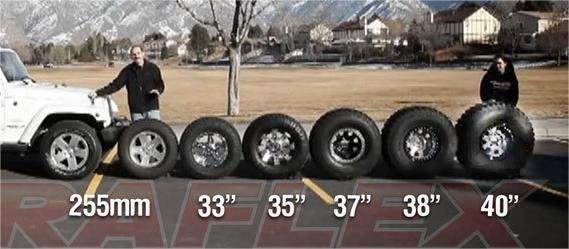
8. Does a Bigger Tire Automatically Make Your 4×4 More Capable?
No. Larger tires can increase ground clearance beneath the axles and improve the ability to roll over some obstacles. But increasing tire size also changes the vehicle’s characteristics.
Depending on the vehicle and the size increase, larger tires can:
- Reduce effective gearing and acceleration.
- Increase braking distances or place greater demands on the braking system.
- Increase steering and drivetrain loads.
- Require suspension or body modifications to prevent rubbing.
- Affect the accuracy of the speedometer and odometer.
- Increase the weight of the wheel-and-tire assembly.
The tire must also fit the wheel correctly, and its load capacity must be appropriate for the vehicle.
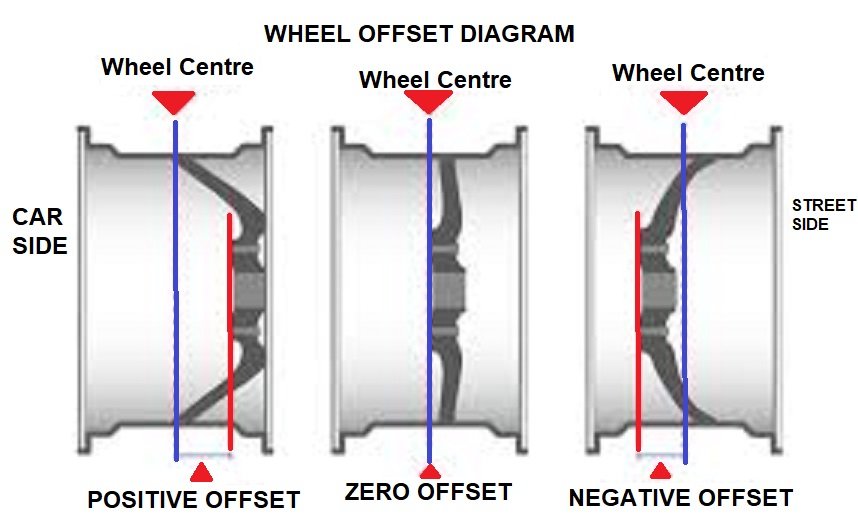
Before upgrading to larger tires, consider the complete setup: tire diameter, wheel width, offset, suspension lift, axle gearing and the available clearance at full steering lock and suspension compression.
For example, fitting 35-inch tires to a 4×4 designed for substantially smaller factory tires may require more than a suspension lift alone. The correct solution depends on the vehicle, its intended use and the amount of modification you are prepared to undertake.
9. Tire Construction Matters as Much as Tread Type
Two tires with similar tread patterns can behave very differently.
When comparing tires, look beyond the HT, AT, RT or MT label and evaluate:
Sidewall construction: Relevant to puncture resistance, load support and performance on rough trails. Ply count or a marketing claim alone does not establish the full strength of a tire.
Rubber compound: Affects grip, wear and performance across different temperatures.
Tread depth and spacing: Influence traction, mud evacuation and contact with the ground.
Siping: Small cuts in tread blocks can improve grip in certain wet and winter conditions, depending on the tire design.
Load index and speed rating: Must be appropriate for the vehicle and its operating requirements.
Tire weight: Heavier tires can affect acceleration, braking, suspension response and fuel consumption.
Winter markings: Important when the vehicle will be used in snow and cold weather.
Manufacturer specifications: Always check the precise model rather than assuming that every tire in a category has the same characteristics.
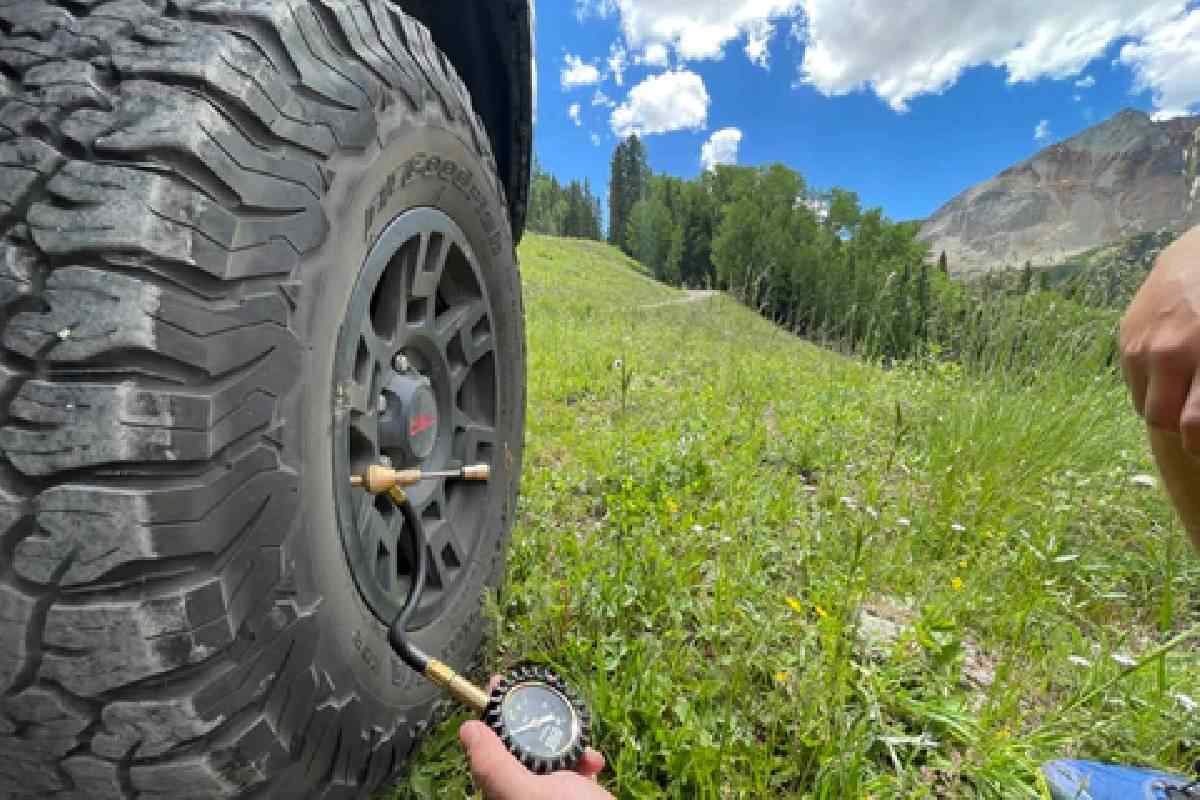
10. Should You Deflate Your Tires for Off-Road Driving?
Reducing tire pressure, commonly called airing down, can increase the tire’s contact area and help the tread conform to rocks and uneven surfaces. It can also improve flotation on some loose terrain.
However, there is no single safe pressure for every tire and vehicle.
The appropriate pressure depends on tire construction, load, terrain, speed, wheel design and how the vehicle is being driven.
Excessively low pressure can cause the tire to debead, damage the sidewall or overheat. On paved roads, tires should be returned to the appropriate road pressure before normal-speed driving.
Airing down is a technique that requires an understanding of the tire and terrain—not a substitute for selecting the right tire in the first place.
Final Recommendation: Choose for the Terrain, Not Just the Appearance
There is no universally best 4×4 tire.
- HT: Best suited to road-focused driving.
- AT: A versatile option for everyday use and moderate off-road adventures.
- RT: A more aggressive hybrid for drivers who regularly leave the pavement.
- MT: Designed for demanding off-road conditions, especially mud.
- Extreme MT: A specialized option for highly demanding off-road builds.
- LT: A light-truck tire designation, not a terrain category.
For many 4×4 owners in Armenia, a well-selected AT tire is an excellent starting point. Drivers who regularly tackle deep mud or demanding trails may benefit from MT tires, while specialized builds may justify more aggressive designs.
The key is to match the tire to your actual driving, vehicle specifications and winter requirements.
Need help choosing tires for your 4×4?
Offroad Zone Armenia can help you evaluate tire size, terrain category, load specifications and compatibility with your suspension and wheels. The goal is not simply to fit the most aggressive tire—it is to build a 4×4 that works for the roads and trails you actually drive.

Շնորհակալություն, շատ պարզ ու հասկանալի էր։ Ես կարծում էի, որ LT-ն նույնպես անվադողի տեսակ է՝ ինչպես MT-ն և AT-ն։
Շնորհակալություն հիանալի հոդվածների համար։