


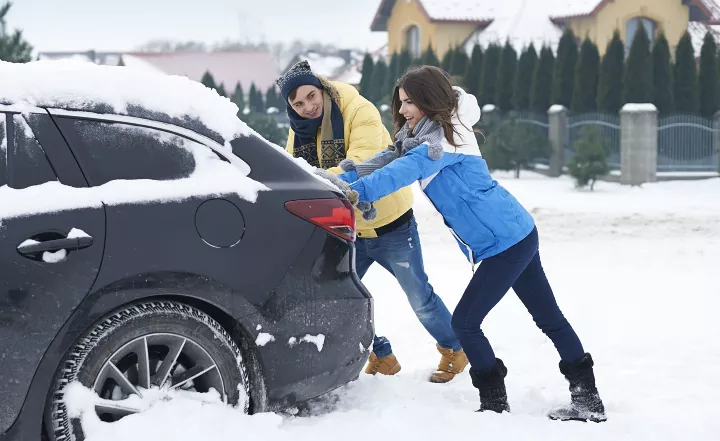
Winter is upon us, and every year we see the same situation on Armenian roads. This year, however, winter arrived earlier than usual, and the snowfall has been heavier than ever before. Snow, ice, and slush have turned even the simplest streets into a challenge. Suddenly, SUVs, pickups, and 4×4 vehicles are everywhere—pulling stuck cars, vans, and even buses.
I have seen many volunteers sharing posts on social media showing how they are helping stranded vehicles. While this willingness to help is truly admirable, I’ve also noticed that in many cases the wrong equipment and incorrect recovery techniques are being used.
In Armenia, people are generally friendly and always ready to help one another on the road. That spirit of cooperation is something to be proud of. For this reason, I felt it was important to publish this article—to help raise awareness and explain the basic principles of safe vehicle pulling and recovery, so that helping others remains not only generous, but also safe for everyone involved.
Helping other drivers is great – But using the wrong rope or method can damage both vehicles — or even injure people.
That’s why today we’re talking about one of the most misunderstood recovery tools:
👉 Recovery Ropes: Tow Straps VS Kinetic Ropes and how they differ from each other
Why Cars Get Stuck So Easily in Winter
During winter, cars get stuck much more often than people expect—especially when roads are not cleaned properly and covered with deep snow or ice. Even short trips can become difficult.
Snow and ice reduce traction significantly, and even powerful SUVs and 4×4 vehicles can lose grip when:
- Roads are covered with packed snow, ice, or slush
- Snow is not cleared and builds up under the vehicle, lifting the wheels off the ground
- Tires are not winter-rated, are worn, or have low pressure
- Ice forms under the tires, making it impossible for them to grip the road
In these conditions, pressing the accelerator only causes the wheels to spin, while the vehicle stays in the same place or sinks deeper into the snow.
When this happens, a simple push or a gentle pull is usually not enough. The vehicle needs a controlled, stronger recovery method. This is where proper recovery equipment and the correct pulling technique make a big difference—helping free the vehicle more safely, more smoothly, and with less risk of damage.
What Is a Kinetic (Dynamic) Recovery Rope?
A kinetic recovery rope is designed specifically for vehicle recovery, not normal towing. It is made from special nylon material that stretches under load — usually up to about 20–30%.
Here’s how it works:
1️⃣ The recovery vehicle starts moving slowly
2️⃣ The rope stretches and stores energy
3️⃣ That stored energy is released smoothly to pull the stuck vehicle out
Instead of a hard jerk, it delivers a controlled elastic pull — strong but smooth.
Kinetic ropes are especially useful when a vehicle is:
- Stuck in snow
- Buried in mud
- Trapped in sand
- On ice-covered or slippery surfaces
✔ Perfect for off-road recoveries
✔ Reduces shock to both vehicles
✔ Makes pulling safer and more effective
What Is a Tow Strap and What Is It Used For?
A tow strap (or static tow rope) is designed for controlled towing, not for pulling a vehicle that is deeply stuck. It does not stretch, which means it provides a firm and direct pull.
Tow straps are perfect when:
- The vehicle already moves or rolls
- You are towing a car with mechanical failure
- You need to pull a vehicle slowly and steadily
- You are driving on normal or slightly slippery roads
- You want a safe, controlled connection between two vehicles
Think of a tow strap as a “transport tool.”
It helps you move a vehicle from point A to point B safely, without sudden force.
✔ Ideal for towing a broken-down car
✔ Ideal for flat, paved, or lightly snowy roads
✔ Ideal when wheels are turning and vehicle is not buried or stuck
Kinetic Rope vs Tow Strap – Simple Comparison
| Feature | Kinetic Rope | Tow Strap / Rope |
| Stretch | High (up to ~30%) | Very low |
| Pull Type | Smooth & controlled | Sudden & harsh |
| Best Use | Stuck vehicles (snow, mud) | Rolling vehicles |
| Vehicle Stress | Low | High |
| Safety | Higher when used correctly | Higher risk |
👉 Important:
Tow straps are fine for towing a car that already rolls freely, but not ideal for pulling a car that is fully stuck.
Recommended Options from OFFROAD ZONE
Which One Should You Carry?
If you drive an SUV or 4×4, the smart and practical choice is very simple: carry both a tow strap and a kinetic recovery rope. Each of them is designed for a different situation, and when you are driving in winter, snow, mud, or off-road conditions, you never really know what kind of problem you may face.
A tow strap is perfect when a vehicle still moves and the wheels can roll. For example, if a car has broken down, lost power, or simply needs to be towed to a safer place or a service station, the tow strap gives you a strong, steady, and controlled connection between two vehicles. It’s all about reliability and safe transportation on normal roads.
A kinetic recovery rope, on the other hand, is made for real recoveries — when a vehicle is properly stuck and cannot move by itself. This is the tool you want when a car is buried in snow, sitting deep in mud, trapped in sand, or stuck on ice. The rope stretches, builds energy, and then helps pull the vehicle out smoothly and safely, reducing stress and damage.
So, when you carry both, you are always ready:
- You can help in more situations, whether it is simple towing or serious recovery
- You reduce the risk of damage to both vehicles because you are using the right tool for the right job
- You are prepared for real-life winter and off-road conditions, where anything can happen
In short, having both a tow strap and a kinetic recovery rope in your vehicle gives you confidence, safety, and peace of mind. It means you are ready not only to help yourself, but also to help others when they need it most.
Basic Safety Rules Everyone Should Follow
Even if you have the best recovery rope or tow strap, safety is always the most important thing. Using the right equipment in the wrong way can still cause damage or serious injury, so it’s important to follow a few simple rules.
✔ Always use proper, rated recovery points
Make sure the rope is attached only to strong, factory-approved recovery points on the vehicle. These are designed to handle the load safely.
❌ Never attach to bumpers, suspension arms, or tow balls
These parts are not made for recovery. They can easily break, fly off, and become extremely dangerous for people standing nearby.
✔ Keep everyone at a safe distance
Nobody should stand close to the rope while pulling. If the rope or shackle fails, it can snap back with huge force. Keeping distance protects everyone.
✔ Use soft shackles or rated metal shackles
Always connect using strong, certified shackles designed for recovery. Cheap or unknown products can fail under load.
✔ Pull smoothly — do not accelerate aggressively
A smooth, gradual pull is safer for both vehicles. Sudden, hard acceleration can damage vehicles, break equipment, and turn a recovery into an accident.
Final Thoughts
Winter recoveries happen every day — on highways, city streets, and mountain roads.
If you drive an SUV or 4×4, chances are you’ll be the one helping others.
Having the right kinetic recovery rope means:
- Less risk
- Less vehicle damage
- Faster and safer recoveries
A small investment that can make a big difference — especially in winter.